Services and local Information
History
This page contains history of the village, of the bowls club and of the village hall.
History of the village
We would love some historical details about Tollerton and the Clubs and Societies we have in the village. If you have a story to tell or photos we can scan then please contact us. clerk@tollertonyorkshire-pc.gov.uk
Tollerton originally lay within the boundaries of the royal forest of Galtres and is mentioned in the Domesday Book (1066). The royal Forest of Galtres was established by the Norman kings of England in North Yorkshire, to the north of the county town of York. Much of the land around Tollerton was owned by the Archbishop of York. In 1256 King Henry III granted John Mansel, Treasurer of York Minister a charter to hold a weekly market and an annual fair to be held on August 14th, 15th and 16th. Kings Edward I and Henry VIII confirmed this charter and an annual fair has been held each year until recently. The name may have originated from the village being located at one of the entrances to the great forest where travellers paid a ‘toll’ for which they were provided with an armed guide to protect them as they travelled on to York.
In the 1600’s the village lay close to the Great North Road from York and was said to be famous for horse racing close to the road. This comes from Drunken Barnaby who gives the horse racing here an early mention:
“Thence to Towlerton, where those stagers,
Or horses courses run for wagers;
Near to the highway the course is,
Where they ride and run their horses;
But still on our journey went we,
First or last did like content me.”
It is believed that the tree on the green was planted to celebrate Queen Victoria’s Diamond Jubilee in 1897 and some of the pictures of the green on this site date from 1904 and show it as a young sapling.
The village had a small Railway Station until the 1960’s and still has a pub called the Station Inn.
Further information courtesy of the Lions Club and the Visit Easingwold website
In Saxon times, Tollerton was part of the administrative area known as the Wapentake of Bulmar, most of which lay within the boundaries of the royal forest of Galtres. According to Gill in his Vallis Eboracensis, published in 1852, the forest was a famous place for the hunting of wild boar, wolves and bears by both ancient British and Saxon kings.
In fact, Gill surmised that the old name for York, Eborwic, was probably derived from Ebor (Saxon for wild boar) and Wic (refuge or retreat), the whole signifying a place which was a refuge from the wild boars in the Forest of Galtres. Gill carries on by quoting Geoffrey de Monmouth regarding a battle in around 400 BC when the Britons routed the Norwegians in the Forest.
By the time of the Domesday survey, Tollerton was a township within the parish of Alne and 8 caracates of land belonged to the Archbishop of York. A carucate was as much land as could be ploughed by one team in a year and varied from 120 to 180 acres.
In 1256, King Henry III granted John Mansel, Treasurer of York Minster, and his successors, the charter to hold a weekly market and an annual fair in Tollerton, the fair to be held on August 14th, 15th and 16th. Kings Edward I and Henry VIII confirmed this charter and the fair persists to the present day as the Tollerton Horticultural Society Show.
There are numerous items on record regarding ‘Old Tollerton’ and at one stage a Village Newsletter was distributed quarterly. An enclosure map of 1817 records all the land-owners in the village.
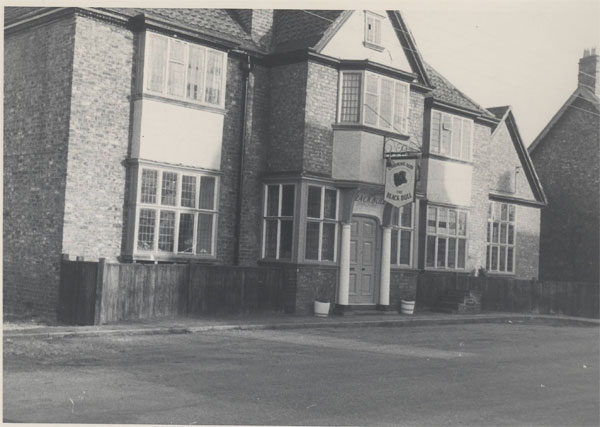
The 1851 Census shows that the village had 1 schoolmaster, 4 innkeepers, 4 shoemakers, 3 tailors, 3 corn millers, 2 grocers, 1 butcher, 1 chemist, 1 blacksmith and 1 cooper. Tollerton cattle market was held behind the site of the Tollerton Arms (which now is a group of 5 houses). The village originally had 3 inns, but the Tollerton Arms (Black Bull) pub was closed and demolished to make way for housing, as were White House Farm buildings.
During World War 2, the hall was the venue for many Saturday night dances which were well attended by servicemen from the neighbouring airfields. Some 20 years ago, the original hall was replaced by a modern, brick-built hall, and this now provides space and facilities for many village activities. There are currently plans for the refurbishment of the hall. The original War Memorial Institute was a wooden building erected as a memorial to the men who gave their lives in the first World War. (click here for more details on the history of the village hall)
Cyril B Haworth Tollerton 1996 , with additions by Mrs Helen Crooke 2000 and Ian Jackson 2015.
History of Bowls Club.
n the autumn of 1983 a few members of the public in Tollerton heard about a new game being played indoors called carpet bowls. At about the same time a very generous lady offered to buy a carpet in order to start a club at Tollerton. This lady, by the name of Mrs Harrison, also bought a carpet for her own village of Newton on Ouse. Additionally she offered to help the villages of Alne and Huby, although Huby did not take up the offer of a carpet.
Tollerton formed a Committee and a Club and by 1984 were raring to go. The next thing was to form a League. This was set up and consisted of clubs from Alne, Coxwold, Easingwold (although they did not stay in the league once “short mat” bowling came in to being), Huby, Newton, Shipton and Tollerton. The league was called The Vale of Mowbray Carpet Bowls League. Tollerton was in the south division. For most of the bowlers this was a very enjoyable and fun game.
After about ten years a new game of indoor bowls arrived which was called “Short Mat bowls”. Heaven knows how it got that name when the short mat is actually longer than the mats used for carpet bowls! Well, we all know how Short Mat bowls took off, what a game! With more people joining and more clubs a new league had to be formed with a new name. The name that emerged was the Kyle Valley League. Why Kyle Valley you may ask? I will try to explain – two members from Tollerton Bowls Club were at a meeting held in Easingwold. At this meeting it was left to Mr Frank Raper to propose the name which was then accepted. This name was proposed because both of the Tollerton members present had worked for many years on either side of this beautiful little valley which runs from Tollerton, through Alne Park and then levels out near Tholthorpe. I myself have worked in this region and can vouch for their sentiments.
Like all clubs we have had good times and bad. During the first few years of the Short Mat bowling the Tollerton club had a very good team, and indeed they won the Kyle valley Challenge Trophy four times. Also during this period certain members of the club kept a carpet bowls team
in the Carpet Bowls League. For many years the Club was quite successful in the various leagues and tournaments, then disaster struck. One of the best bowlers died suddenly at the wheel of his vehicle. Two years later the Club lost another top bowler suddenly. These tragic circumstances rocked the club enormously. However, with a few more players joining and the dedication of the existing members the club has managed to survive. On a more positive note one of the Club’s members, Richard Clark, was a regular member of the County Bowls team for 12 years during which he played in a record 81 games.
History of the Village Hall – the Tollerton War Memorial Institute.
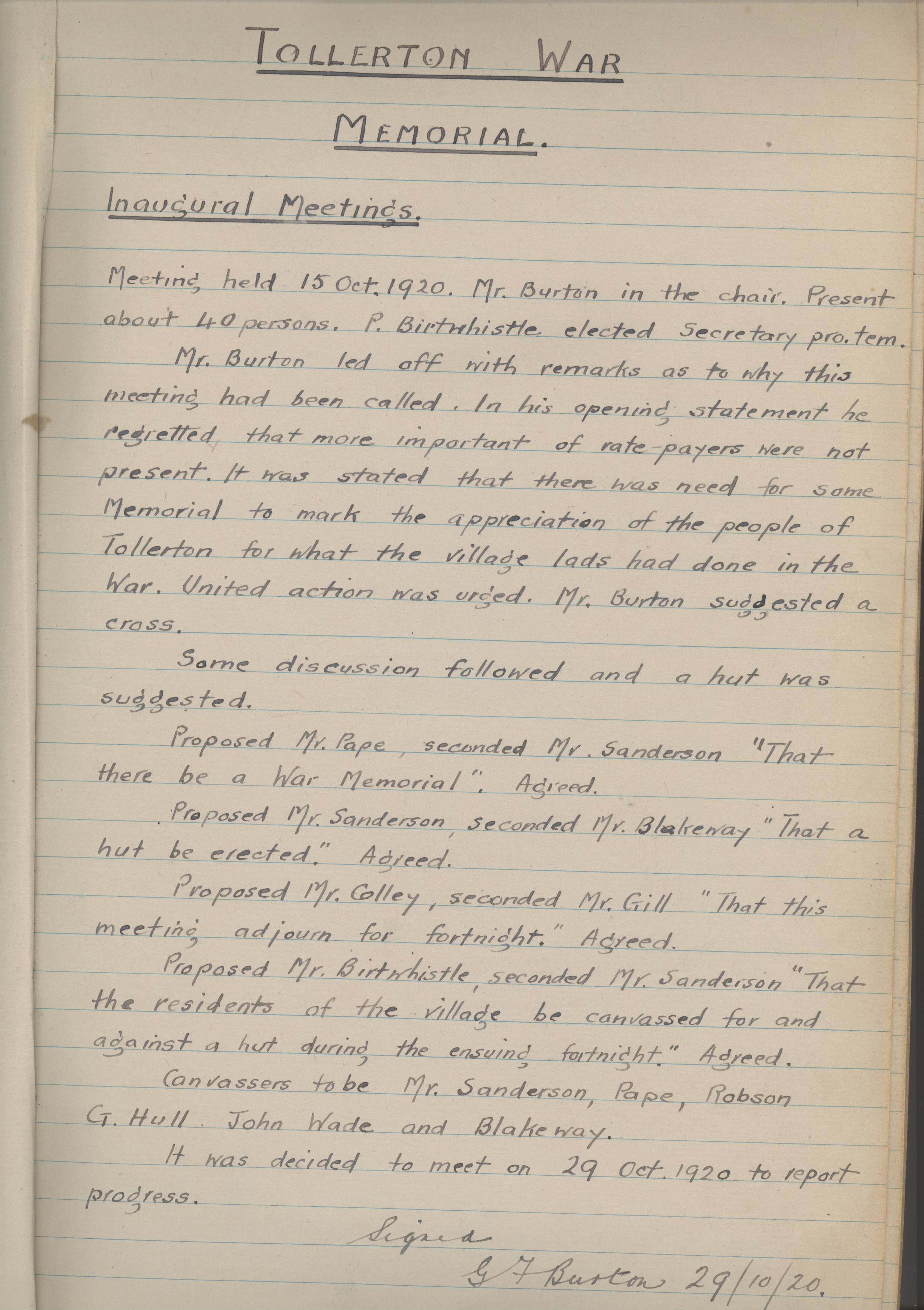
We are grateful to Mr William Knapton for providing access to the old minute books to help with this section. It all started officially with a meeting of ‘about 40 persons’ held on the 15th October 1920. The meeting was chaired by a Mr Burton with the aim of organising a ‘Memorial to mark the appreciation of the people of Tollerton for what the village lads had done in the war’.
Initial discussion was about a cross but it quickly moved on to the idea of erecting a hut. It appears the wooden structure was quickly erected being completed by January 1921. A Dedication Service was held on the 31st January followed a few days later by a Whist Drive and Dance.
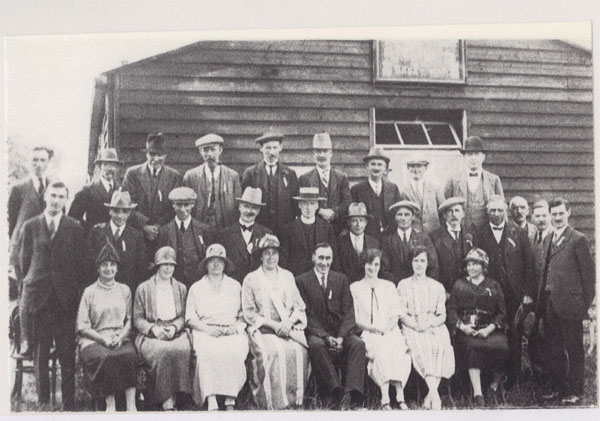 This is the only picture we have of the original Tollerton War Memorial Hall. The picture is of the show committee.
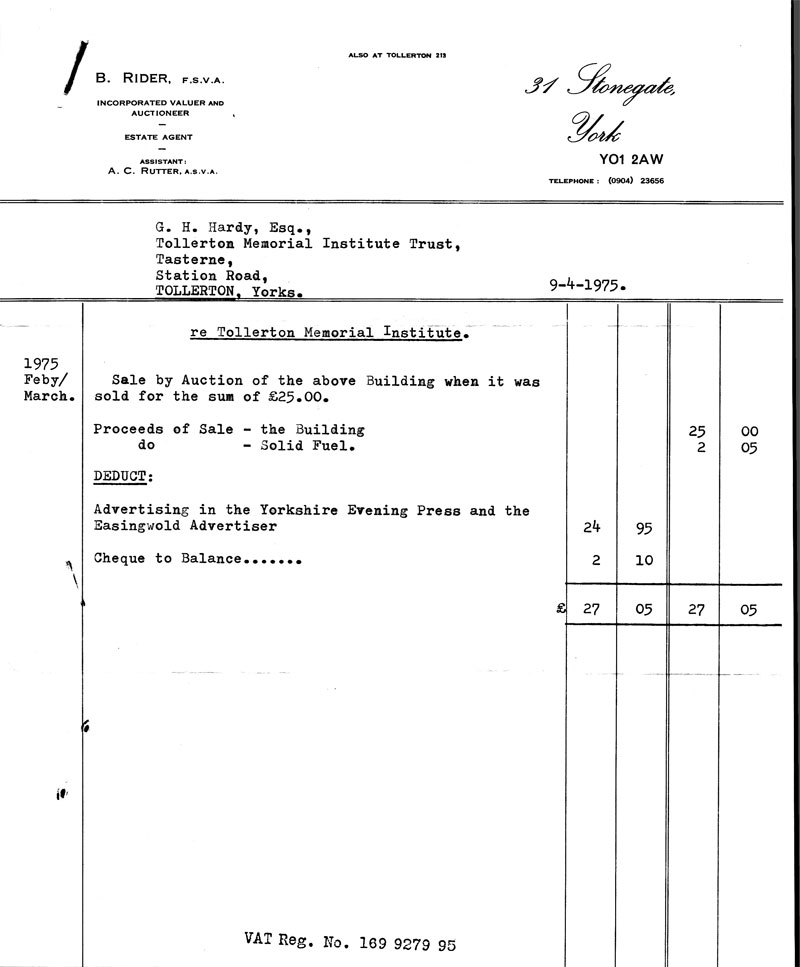
Our current village hall replaced the wooden structure in 1976 and was once again the result of a major fundraising drive amongst the community. The old hall was sold for £25 at auction with a further £2.05 being raised for the coal. When expenses were paid this left the princely sum of £2.10! The wooden structure was then moved to Clifton where we believe it is still in use a Scout Hut.